
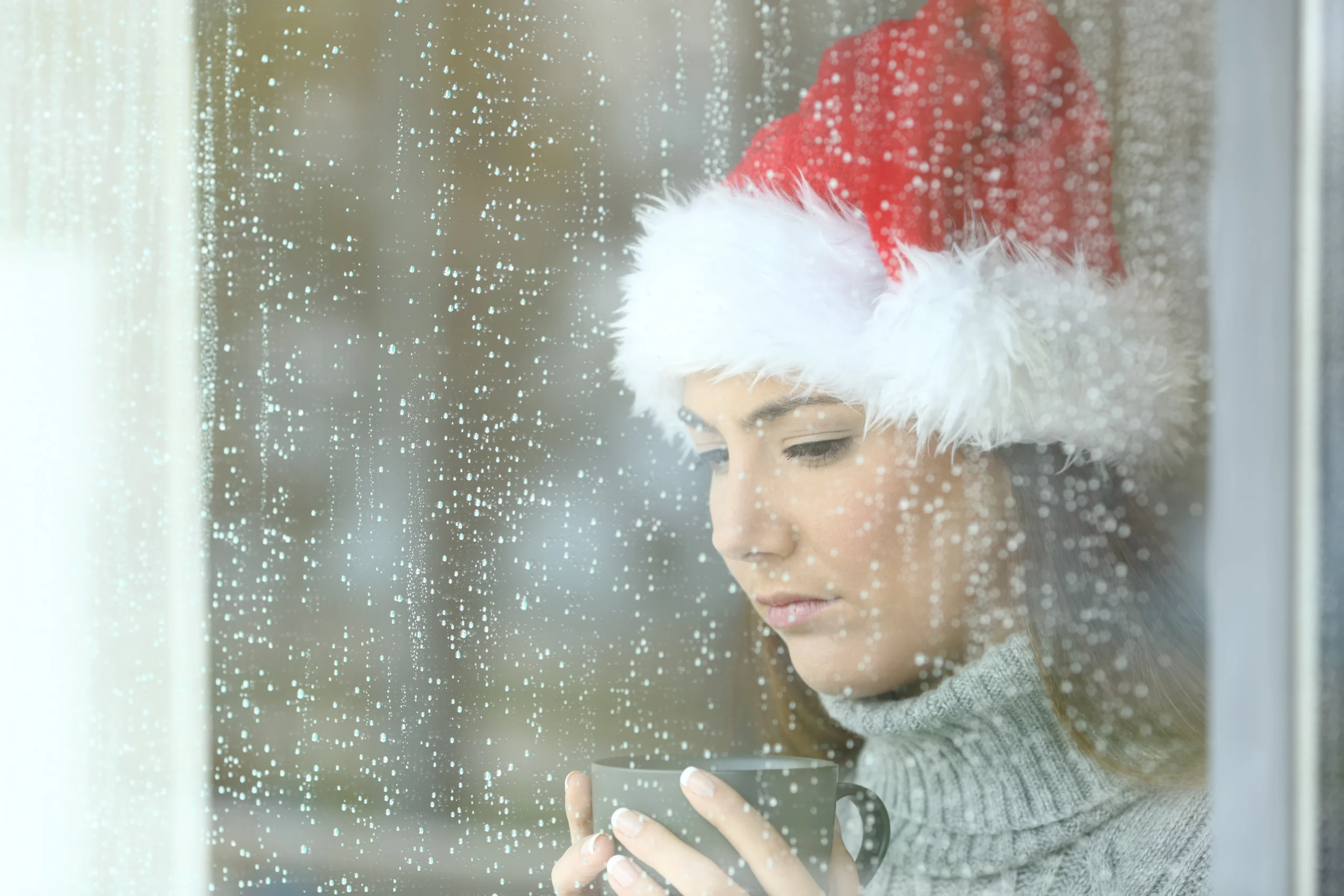

“I am dreading Thanksgiving, and I feel terrible even saying that.” Every November, some version of that sentence comes up in my office. Sometimes it is about a crowded table that feels impossible to sit through. Just as often, it is about an empty one.
The people who say it are rarely ungrateful or difficult. They are tired, or grieving, or estranged from family, or far from anyone who knows them well. And they are carrying an extra weight on top of all of that: the belief that this time of year is supposed to feel happy, and that something must be wrong with them because it does not.
Nothing is wrong with you. This post is for anyone who needs to hear that, and for anyone who could use permission to do the holidays a little differently this year.
How many people actually struggle during the holidays?
More than the holiday ads would suggest. In the American Psychiatric Association’s Healthy Minds poll from November 2025, 41 percent of adults said they expected more holiday stress than the year before, up from 28 percent in 2024. Younger adults felt it most.
Nearly half of adults (48%) said they were worried about missing someone or grief during the holidays. About one in three were worried about challenging family dynamics (32%) or about being lonely (31%).
Source: American Psychiatric Association, Healthy Minds Poll, November 2025 (2,203 U.S. adults)
Loneliness is not only an emotional problem. The U.S. Surgeon General’s advisory on social connection reports that adults who often feel lonely are more than twice as likely to develop depression as those who rarely or never do.
Social isolation is linked to a 29% higher risk of premature death, and chronic loneliness is linked to higher risk of heart disease, stroke, and depression.
If the season feels heavy, you are in a very large group of people who feel the same way and are mostly not saying so.
The misconception: “The holidays are supposed to feel good”
The holidays are not designed around how people actually live. They assume a family that gets along, a full calendar, money to spend, and nobody missing from the table. Very few people have all four. Many people have none of them this year.
When reality does not match the picture, people tend to blame themselves rather than the picture. That self-blame is often what turns an ordinary hard season into a painful one. Feeling sad, flat, irritable, or lonely in December is not a character flaw. It is a reasonable response to a season that asks a lot and highlights whatever is missing.
Your permission slips for this season
These are things I tell patients every year. You do not need a reason that satisfies anyone else to use them.
1. You can say no. To the party, the trip, the gift exchange, the second dinner. “I am not able to make it this year” is a complete sentence. You do not owe a long explanation.
2. You can leave early. Decide your exit time before you arrive, drive yourself if you can, and give yourself credit for showing up at all. Two good hours count more than six miserable ones.
3. You can skip a tradition, or change it. If a tradition hurts this year, because someone is gone or because things have changed, you can set it down, shrink it, or start a new one. Traditions are supposed to serve people, not the other way around.
4. You can bring your grief with you. You do not have to put on a brave face. Saying a loved one’s name at the table, lighting a candle, or stepping outside for a few minutes are all normal. Grief does not take a holiday break, and it does not need to.
5. You can set limits on topics and time. It is reasonable to decide ahead of time that you will not discuss your weight, your job, your relationship status, or politics. A short, repeated line works best: “I am going to pass on that one.” For more scripts, see our post on getting through family gatherings without feeling drained.
6. You can let it be an ordinary day. Not every holiday has to be meaningful. A walk, a movie, and an early night is a perfectly good Thanksgiving.
If you are spending the holidays alone
Being alone and being lonely are not the same thing. Some people choose a quiet holiday and enjoy it. Others are alone because of distance, loss, divorce, estrangement, or work schedules, and the quiet is painful. Both are valid. If the second one sounds like you, a little planning helps more than people expect.
- Plan the day in advance. Unstructured holidays are often the hardest. Decide on a meal you look forward to, an outing, and one thing you will do in the evening.
- Make one point of contact. A phone call, a video chat, or a text exchange with one person can change the shape of the day. If it feels awkward to ask, ask anyway. Most people are glad to be asked.
- Be around people, even without talking. A coffee shop, a park, a movie theater, or a religious service can ease the sense of isolation.
- Consider volunteering. Serving a meal or helping at a community event connects you with others and takes some of the focus off what is missing.
- Limit scrolling. Social media during the holidays is a highlight reel. Comparing your real day to other people’s edited ones rarely helps.
- Keep your basics steady. Sleep, daylight, movement, and meals matter even more when the days are short and the routine is gone. Go easy on alcohol, which tends to deepen low moods.
If you are grieving or estranged from family
The first holiday after a loss is often the hardest, though for many people the fifth or tenth is still difficult. Anniversaries, songs, and family recipes can bring grief back with surprising force. That is not a setback. It is how grief works.
Estrangement brings its own kind of holiday pain, because the culture around you assumes everyone has somewhere to go. If you have stepped away from family for your own wellbeing, the holidays can stir up guilt and doubt. Those feelings do not mean you made the wrong decision. You are allowed to protect your peace and still feel sad about it.
In both cases, it helps to tell at least one person what this time of year is like for you. You do not need them to fix it. You just should not have to carry it alone. If you want a broader guide, our post on coping with holiday stress, grief, and anxiety goes deeper.
When it is more than the holidays
Holiday stress usually eases in January. Sometimes it does not, or it is sitting on top of something that was already there. Shorter days can also bring on seasonal mood changes for some people. Consider talking to a professional if any of these apply:
- Low mood, anxiety, or loneliness has lasted more than two weeks
- You have lost interest in things you usually enjoy
- You are sleeping much more or much less than usual
- You are drinking more to get through the season
- You are pulling away from people who reach out
- You have had thoughts of not wanting to be here
If that last one is true right now, please call or text 988, or call the Georgia Crisis and Access Line at 1-800-715-4225. Both are free, confidential, and available around the clock, including on holidays.
Support in Norcross and Suwanee
At Georgia Behavioral Health, we see patients in person in Norcross and Suwanee and virtually throughout Georgia. New patients are typically seen within about a week, with evening and Saturday hours and providers who speak Spanish and Korean. We offer psychiatric care and talk therapy, and we are in network with most commercial plans, Medicare, and Medicare Advantage.
You do not need to wait for things to get worse, or for the holidays to be over, to reach out. If nobody has asked how you are doing this season, consider this me asking. You can request an appointment here or call (678) 861-6463.