
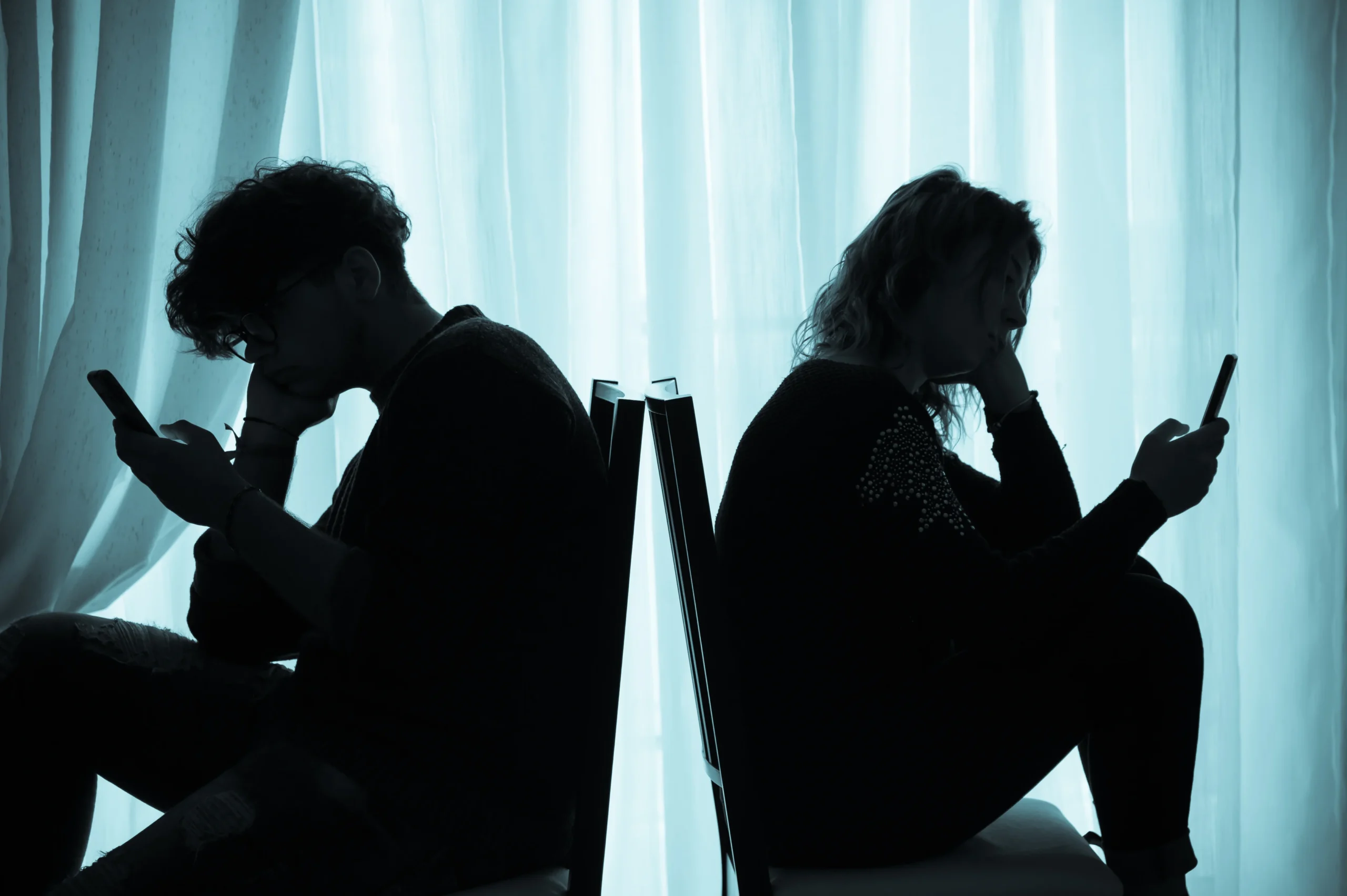

A patient told me last month that she deletes any post that gets fewer than ten likes in the first hour. She said it quickly, the way people say things they have already decided are embarrassing. Then she said, "I know it's stupid. I'm 41."
It is not stupid. It is one of the most predictable things a depressed brain does, and as of this summer we have better evidence for why.
In July, JAMA Psychiatry published a study from a Princeton group led by Dan-Mircea Mirea and Yael Niv that looked at something most social media research skips: not how much time people spend, but how the platform's rewards act on them. The answer surprised the field, and I think it matters for anyone with depression who still has an app on their phone, which is nearly everyone.
The misconception most people bring in
The story patients usually arrive with is one of two things. Either social media is poison and they should quit, or social media is harmless and their doctor is out of touch for asking about it. The research supports neither.
Large reviews have found that the overall link between time on social media and mental health is real but small. A 2019 analysis of more than 350,000 adolescents by Orben and Przybylski in Nature Human Behaviour found that screen time explained less than half a percent of the variation in wellbeing. Time is the wrong variable. That has been the field's uncomfortable conclusion for several years.
The better question is what the platform is doing to you while you are on it. Likes are the clearest example. They are a social reward, delivered in a number, at unpredictable intervals. If you wanted to design something to shape behavior, you would design a like button.
What the study did
The Princeton team analyzed more than 17 million posts from 7,736 Twitter users across three separate datasets collected between 2023 and early 2026. In the first, roughly a thousand users had publicly disclosed a depression diagnosis, compared against five thousand randomly sampled users. In the second, participants recruited through Twitter ads reported how depressed they had felt over the past four weeks. In the third, a preregistered replication, participants completed the Zung Self-Rating Depression Scale, a validated clinical questionnaire, along with measures of anxiety, compulsivity, and social withdrawal.
For each person, the researchers asked a simple question of the data. When you got more likes yesterday, did you post more today? That relationship is what behavioral scientists call reinforcement tendency. Then they asked whether depression changed it.
In all three datasets, people with a depression diagnosis or higher depression symptoms were more strongly reinforced by likes than people without depression. The finding held after controlling for age, gender, and how often each person normally posts, and it was specific to depression. Loneliness and general mental health did not show the same effect.
Source: Mirea et al., JAMA Psychiatry, September 2026
This is the opposite of what decades of laboratory research would predict. In the lab, depression is associated with blunted reward learning. Depressed participants are slower to learn from small monetary rewards and less responsive to them. The authors are candid about the contrast. In the real world, where the reward is social and people are acting on their own volition, depression looks like heightened sensitivity, not less.
Two details from the third dataset are worth sitting with. The reinforcement effect was tied specifically to an anxious-depression pattern, meaning depression, apathy, and trait anxiety together. And a separate behavior, the tendency to keep posting day after day regardless of response, was linked to compulsivity and intrusive thoughts instead. Different symptom clusters, different mechanisms, both visible in something as ordinary as a posting history.
What this looks like in a real life
The patient I mentioned is not unusual. What I hear, in different words, from a lot of people with mood disorders is that the response to a post does something to their day that a real conversation does not. A good response lifts them for an hour. A poor one confirms something they already believed about themselves.
Sometimes it is anxiety and I call it that. Sometimes, before I know better, I call it anxiety when it is actually depression using social feedback as a substitute for a reward the rest of life has stopped providing. The study's authors raise this possibility directly. They call it the social compensation hypothesis: when offline life offers fewer rewards, people with depression may lean harder on the accessible ones, and likes are the most accessible reward ever built.
That is not a character flaw. Non-response to ordinary rewards is a clinical feature of depression. Hypersensitivity to social ones may be the same feature seen from the other side.
Does this mean social media causes depression?
The study cannot answer that, and the authors say so plainly. The data are cross-sectional. It could be that depression makes people more reinforceable by likes. It could be that being more reinforceable by likes worsens depression over time. It could be both, in a loop.
There is some evidence for the loop. In a 2015 study in the Journal of Abnormal Child Psychology, Nesi and Prinstein found that adolescents who used social media to seek feedback developed worse depressive symptoms a year later, particularly girls and adolescents who were already less popular. The editorial accompanying the JAMA Psychiatry paper, titled "Do Likes Reinforce Depression?", makes the same point. Reinforcement is a mechanism that runs in both directions.
The effect sizes in this study are small, and the authors are careful about that too. But depression affects roughly 4 percent of people worldwide according to the World Health Organization, and more than 60 percent of humans use social media. A small effect on that many people is not a small thing.
What actually helps
I am not going to tell you to delete your accounts. For some patients that is the right move, and for many it removes a real source of connection and replaces it with nothing. What follows is what I actually discuss in the office.
1. Notice what you are checking for. The next time you open an app, ask whether you are there to see something or to see whether something was seen. The second one is the pattern the study is describing. You do not have to stop. You have to notice.
2. Turn off the number. Most platforms now let you hide like counts on your own posts. This is one of the few settings that changes the mechanism rather than the time spent. Without a number, there is less to be reinforced by.
3. Move from posting to messaging. Direct messages carry social reward without a public scoreboard. For patients who use social media for connection, this is the version that tends to help rather than hurt.
4. Treat the depression, not the phone. If likes are compensating for a reward system that has gone quiet, the fix is the reward system. That is a clinical problem with clinical answers. A thorough psychiatric evaluation looks at whether what you are experiencing is depression, an anxiety disorder, or the anxious-depression combination the study specifically flagged, because the treatment differs. Talk therapy is where the feedback-seeking pattern itself gets worked on.
5. If medication has not worked, that is information. Roughly one in three people with major depressive disorder do not respond adequately to standard antidepressants. Two adequate trials without relief meets the definition of treatment-resistant depression, and for that there are options that work on the brain's reward and mood circuits directly. TMS therapy is FDA cleared and non-invasive. SPRAVATO (esketamine) is FDA approved for treatment-resistant depression and acts on the glutamate system rather than serotonin. We offer both in our Norcross office, along with office-based IV ketamine for appropriate patients. If you have already read our piece on chronic stress and treatment-resistant depression, you know how often the two travel together.
A note for parents
The datasets in this study were adults, but the adolescent research is older and points the same way. If your teenager's mood tracks the response to their posts, that is not vanity and it is not a phase to wait out. It is a pattern with a name, and it is one of the more common reasons families come to us for child and adolescent therapy. The earlier the pattern is named, the easier it is to interrupt.
When to seek care
Consider an evaluation if any of these describe the last few weeks:
- Low mood or loss of interest that has lasted more than two weeks
- Your mood noticeably rises and falls with the response to what you post
- You delete posts that do not perform, or you feel flat unless you are getting a response online
- You have tried at least one antidepressant at a full dose without adequate relief
- Sleep, appetite, or concentration have changed alongside the above
- You have had thoughts of not wanting to be here
If that last one is true right now, please call or text 988 in the United States. Asking someone directly about suicide does not increase risk. It opens a door.
Depression care in Norcross, GA
At Georgia Behavioral Health we see new patients within about a week, with evening and Saturday hours and providers who speak Spanish and Korean. We are in network with most commercial plans, Medicare, and Medicare Advantage. If you are reading this at 1 a.m. with your phone in your hand, wondering whether what you feel counts, it counts. That is worth saying out loud to someone, and if you would like that someone to be us, you can request an appointment here or call (678) 861-6463.